

 During a routine shelf check on the lower level of Hawthorne-Longfellow Library, library staff revealed a treasure trove hidden amid the oversized government documents. Too big for standard shelving and unwieldy to transport, these volumes had long evaded digital cataloging, but as staff carefully perused their pages, they were transported into the nation’s geographic, scientific, and political history.
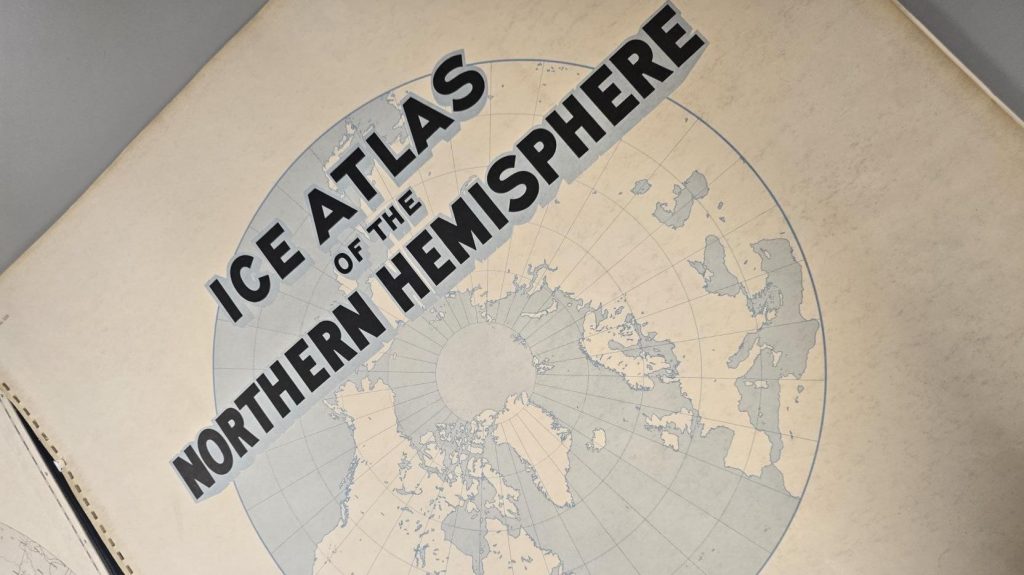
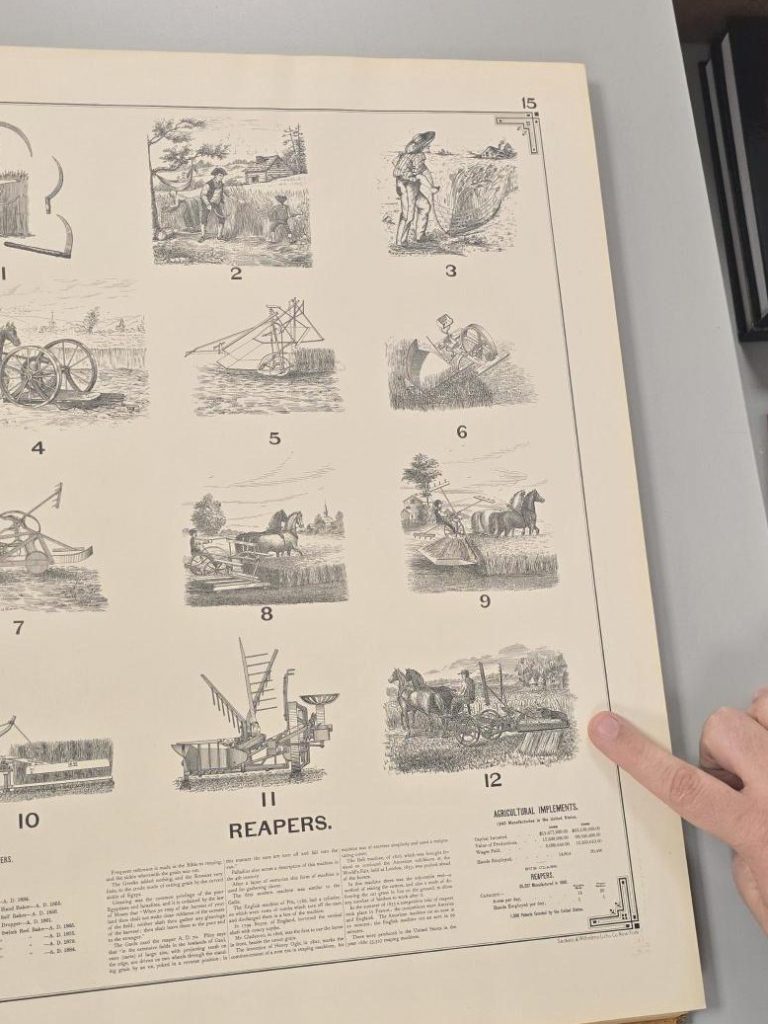
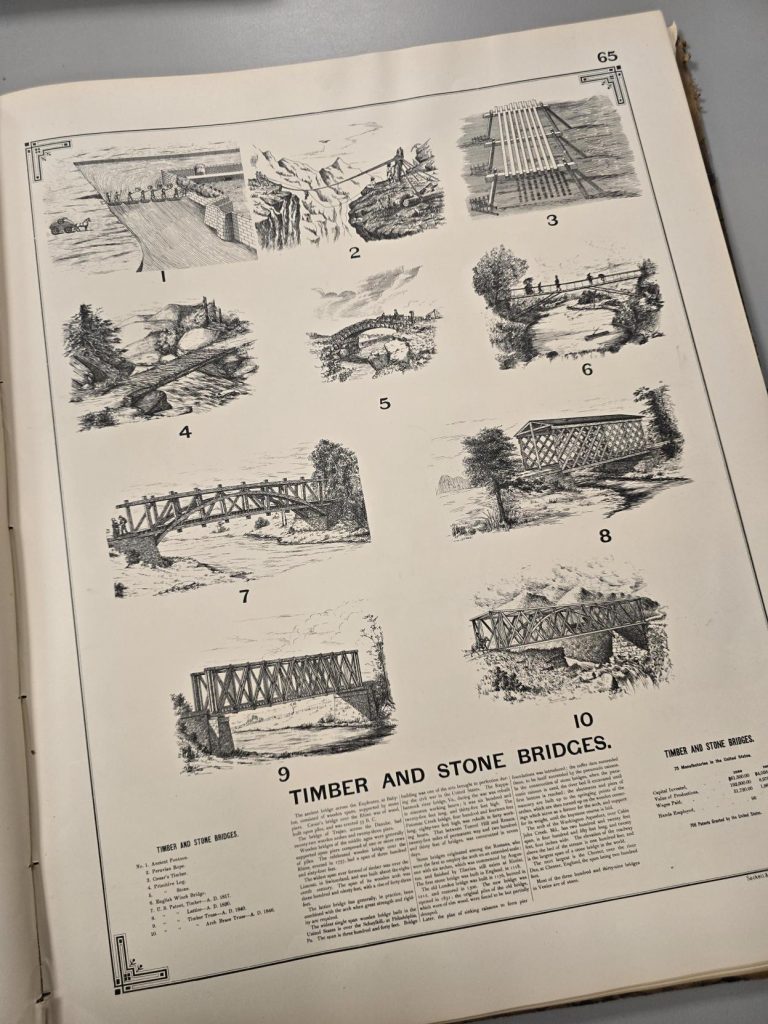 Highlights included Ice Atlas of the Northern Hemisphere, illustrating seasonal and permanent ice packs over the Arctic in the 1940s, and The Growth of Industrial Art, published in the 1880s, illustrating historical technology in subjects ranging from timber and stone bridges, to agricultural implements like reapers, from the handheld sickle to horse-drawn machines, complete with details on their inventors and the decades they were most commonly in use. Ice Atlas of the Northern Hemisphere is also held in Special Collections & Archives, where it can be viewed on-site. The Growth of Industrial Art can be found in its entirety on the Internet Archive.
Library staff assessed the condition, format, and classification of each item. Brittle volumes were routed to the bindery, where Conservation Technician Shawn Gerwig and her student employee, Ailee Jones ’28, constructed custom enclosures for the most delicate pieces.
Meanwhile, Cataloging and Metadata Librarian Ryan Wheeler began the painstaking work of creating bibliographic records, so that researchers could finally find and access what had been hiding in plain sight.
The work is still ongoing. Once cataloging is complete, the entire collection will be transported to the Annex, the climate-controlled off-campus storage facility where over 90,500 other requestable items are held. There, they can be better preserved, but can still be requested at any time or digitized by section through digital delivery.
Months of quiet, meticulous work have transformed this forgotten collection into an accessible resource. Thanks to Collections Management staff, these documents now have a permanent place in the library’s catalog, and in its story.